


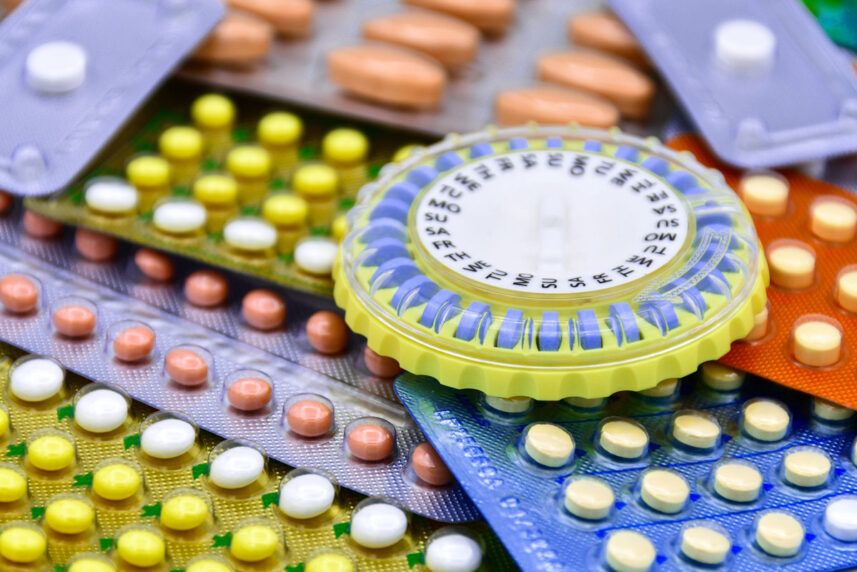
In the United States, hormonal birth control is a very common and popular contraceptive choice. They’re generally considered safe and effective for preventing pregnancy.
What’s more, hormonal birth control methods, including the contraceptive pill, can safely reduce the frequency of your periods or stop them altogether if you wish. However, you might notice some side effects, and you may still notice some spotting.
Sex and gender exist on spectrums. This article uses the terms “female” and “women” when discussing people who are assigned female at birth to reflect language that appears in source materials.
While gender is solely about how you identify yourself, independent of your physical body, you may need to consider how your personal circumstances will affect diagnosis, symptoms, and treatment.
Can birth control stop your periods?
The Centers for Disease Control and Prevention (CDC) notes that about 47 million women in the United States between the ages of 15 and 49 years use a method of birth control, such as the contraceptive pill, an IUD, an injection, or another method.
True to the name, hormonal birth control methods contain hormones that affect your body in many ways, including your menstrual cycle. If you wish to stop your period altogether, skip a period, or reduce its frequency, you can safely use hormonal birth control for this purpose.
Keep in mind that completely stopping periods — medically known as reaching amenorrhea (the absence of menstruation) — is difficult to achieve, according to the American College of Obstetricians and Gynecologists.
—————-
Need a diagnosis or prescription quickly? Optum Perks offers personalized on-demand care in as little as 15 minutes. For $29, answer a few questions online and receive a diagnosis and treatment plan from a US-licensed healthcare professional. Get started here.

Oral contraceptives
Birth control pills are one of the most common contraceptive methods and one of the most used methods to stop periods. Nearly 25% of women in the United States ages 15 to 44 years use birth control pills, of which there are two main types:
- Combination pills: Commonly known as “the pill,” the medications often contain the hormones estrogen and progestin (the synthetic version of progesterone).
- Progestin-only pills: These pills, as their name hints, contain just progestin.
Of these two types, combination pills are the most common ones used to reduce the frequency of your periods. However, 2021 research has shown that progestin-only pills and other progestin-only birth control methods are promising in effectively controlling menstruation.
How it works
Combination pills contain the synthetic versions of the hormones estrogen and progesterone that prevent the release of an egg every month. With this, your body doesn’t prepare for ovulation — so the lining in the uterus is thinner, and there’s less bleeding.
To reduce or stop your periods, you can take combination pills in a continuous manner. That is, combination pills come in a pack of 28 pills, 21 of which contain hormones, with 7 placebo pills.
To skip or reduce your periods, you can take the hormone-containing pills continuously and skip the placebo pills, which are usually scheduled for the last week of the month.
Possible side effects
Combined pills usually cause minor side effects, which include:
- nausea
- headaches
- spotting
- vaginal dryness
- changes in mood
- breast tenderness
- changes in weight
Examples
- Combined pills: Apri, azurette (Mircette), caziant (Velivet), and Yasmin 28 (Yaz)
- Progestin-only pills: norethindrone (Camila), Heather, and Incassia
————-
If you need help covering the cost of medications, the free Optum Perks Discount Card could help you save up to 80% on prescription drugs. Plus, you can now get them delivered to your home in as little as 3 days. Search for your medication here.

Free prescription coupons
Seriously … free. Explore prices that beat the competition 70% of the time.
Get free cardIUDs
IUDs consist of copper or plastic that a healthcare professional inserts into your uterus.
Some IUDs use copper to alter the cervical mucus and prevent sperm from reaching the egg. Other IUDs release progestin. It’s this second form of IUD that can help reduce or stop periods.
How it works
Hormonal IUDs release a daily amount of progestin. Some people with hormone IUDs can see their periods disappear, while others will experience shorter and lighter periods.
Hormone IUDs usually last 3 to 5 years.
Possible side effects
Some adverse effects of IUDs can include:
- mood changes
- skin problems
- breast soreness
- cramps
- spotting
Birth control implant
Contraceptive implants (Nexplanon), which release progestin, can last up to 5 years. One of the common side effects of the implant is amenorrhea, which is when your period stops.
How it works
The birth control implant is a small plastic rod that a healthcare professional places under the skin of your arm. This implant releases progestin to thicken your cervical mucus and prevent sperm from reaching the egg. It can also stop your ovaries from releasing an egg.
Possible side effects
Some possible adverse effects of the birth control implant include:
- nausea
- headaches
- mood changes
- breast tenderness
- weight changes
- ovarian cysts
- possible infection
- bruising and pain in the area of the implant
- changes in menstrual bleeding like spotting
Birth control injection
The birth control injection is available under the brand name Depo-Provera. You have to get the shot every 3 months.
How it works
The birth control shot contains progestin, which prevents ovulation and can lead to lighter periods or no periods at all.
Possible side effects
The most common adverse effects of the contraceptive shot are:
- irregularities in your periods — from having heavier bleeding to spotting to having no menstruation at all
- nausea
- headaches
- breast tenderness
- changes in weight
- depression
Online care for birth control
If you’re using birth control to stop your period, it’s important to take it continuously — otherwise, your period will come back. This means you should try to stay on top of medication refills.
Online care services, including Optum Perks Online Care, may make getting birth control refills easier. With this service, you can submit an online form answering questions about your individual needs, and a licensed healthcare professional will respond soon after to prescribe a birth control refill for you — without the need to make an in-person appointment.
Summary
Some women using hormonal birth control methods use it for other purposes other than preventing pregnancy, such as reducing and stopping periods.
From the pill to IUDs and implants to birth control injections, several contraceptive methods can either reduce or stop periods by releasing hormones that prevent ovulation.
But keep in mind that complete amenorrhea (or the absence of menstruation) is difficult to achieve, and some birth control methods are more effective than others at this. It can depend on individual factors that work best for you. You can work with a healthcare professional to try different options.
All these methods carry side effects, such as nausea, headaches, breast tenderness, mood changes, and the risk of infection.
Talk with a healthcare professional if you’re experiencing side effects that are worrying you. It can also be helpful to talk with a medical professional if you have questions about birth control methods that can help lighten or stop your periods and that suit your needs and lifestyle.
—————
Download the free Optum Perks Discount Card to save up to 80% on many prescription medications. Plus, you can now get them delivered to your home in as little as 3 days. Search for your medication here.