


Leukemia interferes with your body’s ability to fight infections and help with blood clotting. This may lead to specific symptoms like easy bleeding and bruising, rashes, and mouth sores.
Not everyone with leukemia will experience bruising, and not all bruising is a sign of leukemia.
This article discusses the types of leukemia bruises and the differences when compared to regular bruising.
Types of bruises in leukemia
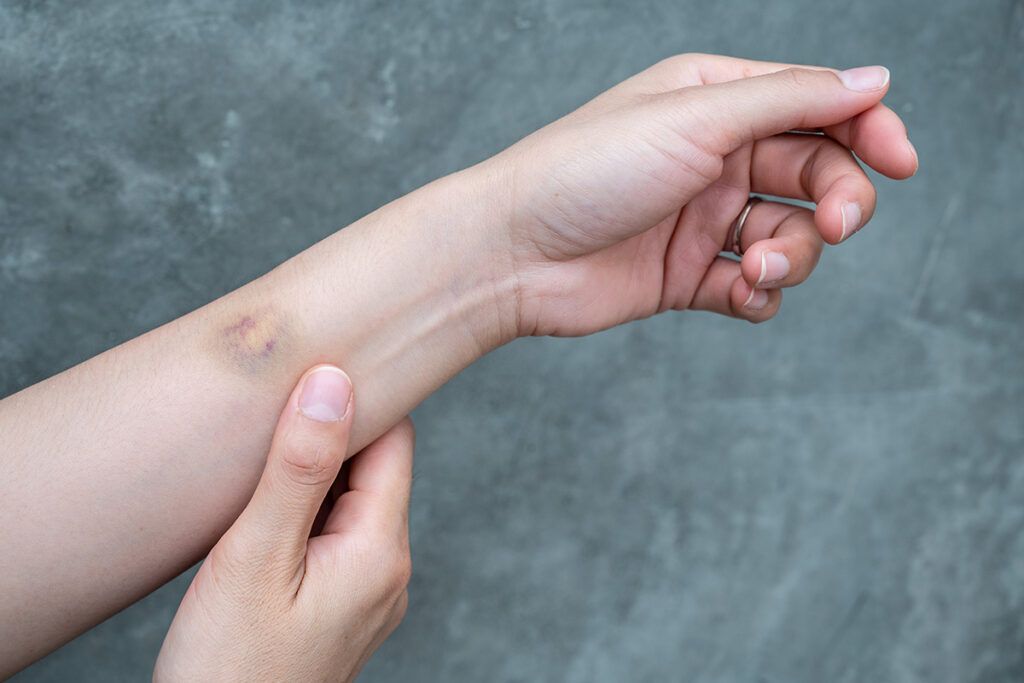
People with leukemia may experience different types of bruises. Each type has a different look, and it may have different symptoms.
Some people may refer to these bruises as leukemia skin rashes, because of how they often appear in clusters.
Ecchymoses
Ecchymoses is the medical term for bruises. People with leukemia may have a low platelet count. Platelets can help form blood clots to stop bleeding.
A low number of platelets may not be sufficient to stop bleeding effectively and may lead to bruises under your skin when small blood vessels break.
Leukemia bruises resemble other types of bruises, but you may get them more often, without apparent cause, and in unusual places in the body.
These leukemia bruises may be tender to the touch and appear darker than your skin tone.

Petechiae and purpura
Petechiae are tiny spots that occur when the small blood vessels under your skin, known as capillaries, break. These spots are typically small, and when larger than 2 millimeters (mm), they are called purpura.
As with ecchymoses, a low platelet count may cause the formation of these spots on your skin. Petechiae and purpura may appear differently depending on your skin color. They may appear red, brown, or purple.
Petechiae may be more challenging to spot on darker skin tones. However, recognizing them in lighter areas, such as the palms of your hands or under your feet, may be easier.
Because they’re tiny bruises, petechiae and purpura feel different than skin rashes. They’re not painful, and they don’t itch.
To distinguish petechiae from a skin rash, apply pressure to the area. Petechiae and purpura don’t change color with pressure, while skin rashes do.
Difference between regular bruising and leukemia bruises
Bruising is one of the most common early symptoms of leukemia. However, you may find it difficult to recognize the difference between frequent and leukemia bruises.
Differences may include:
- Leukemia bruises usually occur in atypical places, like your back, hands, soles of the feet, or legs.
- You’ll notice frequent bruises without an apparent cause.
- There are usually multiple unexplained bruises at a time.
- Leukemia bruises generally take longer to disappear compared to regular bruises.
- Other blood-related symptoms may be present, for example, nosebleeds.
Where do leukemia bruises typically appear?
Leukemia bruises can appear anywhere on your body. However, you may notice they often appear on parts of your body where you wouldn’t expect to have a bruise, including:
- hands
- feet
- back of the legs
- back
In children with leukemia, bruises may appear on various parts of the body at the same time, such as the:
- head
- face
- ears
- chest
- buttocks
Other skin symptoms associated with leukemia
Skin discoloration or paler skin tones may be typical in leukemia. The lowered red blood cell count may cause this.
You may also develop frequent skin rashes and infections. This is because leukemia impairs the immune system, which makes it more difficult for your body to defend against threats.
Leukemia cutis is one possible effect, although rare. Symptoms may include tiny raised bumps, thick patches, and blisters on the skin of your limbs, face, and trunk.
Leukemia may also lead to erythema nodosum, a series of nodules or plaques that are firm and painful to the touch. Erythema may appear only around the joints in the legs.
Cancer treatment, including chemotherapy and radiation therapy, may also bring on the development of skin rashes.
Can you treat leukemia bruises?
Leukemia bruises don’t require or respond to treatment. A bruise typically takes 10–14 days to go away. You may find that as one bruise resolves, another develops.
The first line of treatment for leukemia is chemotherapy, a type of therapy that uses drugs to kill cancer cells. These drugs may include:
- doxorubicin
- etoposide
- cytarabine
- asparaginase
- daunorubicin
Other treatment options, including radiation therapy, are available to treat leukemia.
————-
If you need help covering the cost of medications, the free Optum Perks Discount Card could help you save up to 80% on prescription drugs. Plus, you can now get them delivered to your home in as little as 3 days. Search for your medication here.

Free prescription coupons
Seriously … free. Explore prices that beat the competition 70% of the time.
Get free cardSummary
Leukemia affects your body’s ability to clot blood. It may be easier to bleed and more challenging to stop. This may lead you to develop bruises of all sizes and in unusual places on your body.
Leukemia bruises look similar to regular bruising. They may feel sore to the touch and take up to 2 weeks to resolve on their own.
—————
Download the free Optum Perks Discount Card to save up to 80% on many prescription medications. Plus, you can now get them delivered to your home in as little as 3 days. Search for your medication here.