


Attention deficit hyperactivity disorder (ADHD) is a neurodevelopmental mental health condition that affects attention and behavior regulation.
Medications can help to manage symptoms of ADHD in adults and children. You may want to work with a healthcare professional to determine the best type for your lifestyle and individual needs.
According to the Centers for Disease Control and Prevention (CDC), 62% of children with ADHD take medication to manage their symptoms.
There are two main types of medications for managing symptoms of ADHD: nonstimulant medications and central nervous system (CNS) stimulant medications.
Nonstimulant medications work by keeping substances like dopamine and norepinephrine in your brain for longer, as well as increasing the amount of them. Stimulant medications increase the amount of these same substances that reach your brain.
Some stimulant medications that a medical professional may prescribe to manage your symptoms are available as skin patches that release the medication into your bloodstream.
Learning more about the types of ADHD medications available as skin patches, how they may work, and the possible side effects can help you to decide the right treatment for you.
What is an ADHD patch?
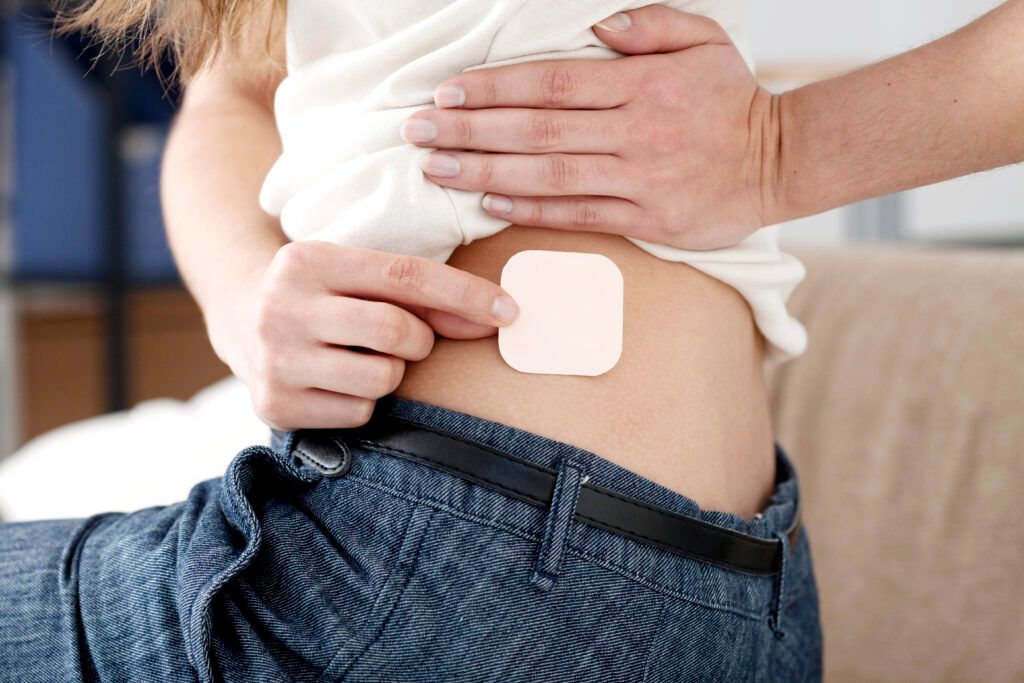
While oral tablets are the most common way to take ADHD medication, they may not be the right choice for some people. In these cases, certain medications that can help manage symptoms of ADHD are available as transdermal patches.
A transdermal patch is a thin piece of sticky material you can apply to your skin. These patches allow the medication to be absorbed into your body through your skin.
There are currently two types of ADHD medication that are available as transdermal patches. Both are CNS stimulant medications that healthcare professionals often prescribe to children between the ages of 6 and 17 years with behavioral therapy.
The following CNS stimulant medications are available as skin patches:
- dextroamphetamine (Xelstrym)
- methylphenidate (Daytrana)
If you need help covering the cost of medications, Optum Perks’ free Discount Card could help you get up to 80% off prescription medication. See how much you can save on your medication here.

How do they work?
Medications that come as transdermal patches enter your blood vessels through your skin. This allows the medication to circulate around your body. So, only those medications that can pass through your skin are suitable for skin patch delivery.
ADHD skin patch medications are CNS stimulant medications. These work to increase how much dopamine and norepinephrine are in your brain. These substances are called neurotransmitters — chemical messengers that allow the nerves in your brain to communicate.
Dopamine and norepinephrine both help manage symptoms of ADHD by:
- maintaining alertness
- increasing focus
- sustaining motivation
You should apply the skin patch to the hip area at least 2 hours before you need it to work. Do not leave the patch on for longer than 9 hours unless a healthcare professional tells you otherwise.
What are the side effects?
Medications always have the potential for side effects. Not everyone experiences the same side effects if any at all.
Stimulant medications have the potential for dependence. A healthcare professional will monitor your dosage closely to ensure this is not a risk. If you have a history of misuse or dependence, you may prefer to take a nonstimulant type of ADHD medication.
Some possible side effects of ADHD skin patch medications include:

Free prescription coupons
Seriously … free. Explore prices that beat the competition 70% of the time.
Get free cardSleeping problems
ADHD skin patch medications can interfere with your sleep. As you control how long you leave the patch on your skin, try not to remove the patch too late in the day.
If you experience problems with sleep during treatment, speak with a healthcare professional. They may reduce your dosage or tell you to remove the patch earlier in the day.
Tics
Occasionally, stimulant medications can cause children to develop tics — repetitive movements or sounds. If this is the case, you should speak with a healthcare professional. An alternative medication may be able to relieve the tic.
Eating
A common side effect of stimulant skin patch medications in children is appetite suppression. This can appear as though a child isn’t eating because they’re not hungry, but this may be the stimulant medication suppressing their appetite.
Skin color changes
According to the Food and Drug Administration (FDA), the methylphenidate skin patch (Daytrana) can cause permanent changes to skin color, called chemical leukoderma. This condition is not harmful.
If you take this medication, be sure to monitor the sites where you apply the patch for differences in skin color.
Other side effects
Some other side effects include:
What are the benefits of skin patches over other medications?
Taking your ADHD medications through skin patches has advantages over other methods, such as oral medications.
Some benefits include:
- Control: As these medications are short-acting, you control when you apply them. For example, if you have trouble sleeping with the medication, you can remove the patch earlier in the day to help manage this side effect.
- Safety: By taking your medications through skin patches, you can protect your liver from the risk of damage. This is not the case with oral medications.
- Convenience: Skin patches can be an effective alternative to oral medications if you or your child have trouble swallowing tablets.
Summary
ADHD medications are available as skin patches and are a useful alternative to oral medications, particularly for children and young adults. Currently, only stimulant medications have approval from the FDA for treating ADHD through skin patches.
If you’re interested in skin patch medications to help manage ADHD symptoms, you can talk with a healthcare professional to see if you’re eligible.
Download the free Optum Perks Discount Card to save up to 80% on some prescription medications.