


—————-
Need a diagnosis or prescription quickly? Optum Perks offers personalized on-demand care in as little as 15 minutes. For $39, answer a few questions online and receive a diagnosis and treatment plan from a US-licensed healthcare professional. Get started here.

Overview
Plasma is the liquid part of your blood that carries blood cells, water, antibodies, and more. It’s used as a lifesaving treatment for people with bleeding disorders, immune deficiencies, organ transplants, and burns.
Donating plasma can save lives, but knowing whether you’re eligible to donate can be complicated. Factors like your overall health, recent travels, and medications you take come into play.
What excludes you from donating plasma?
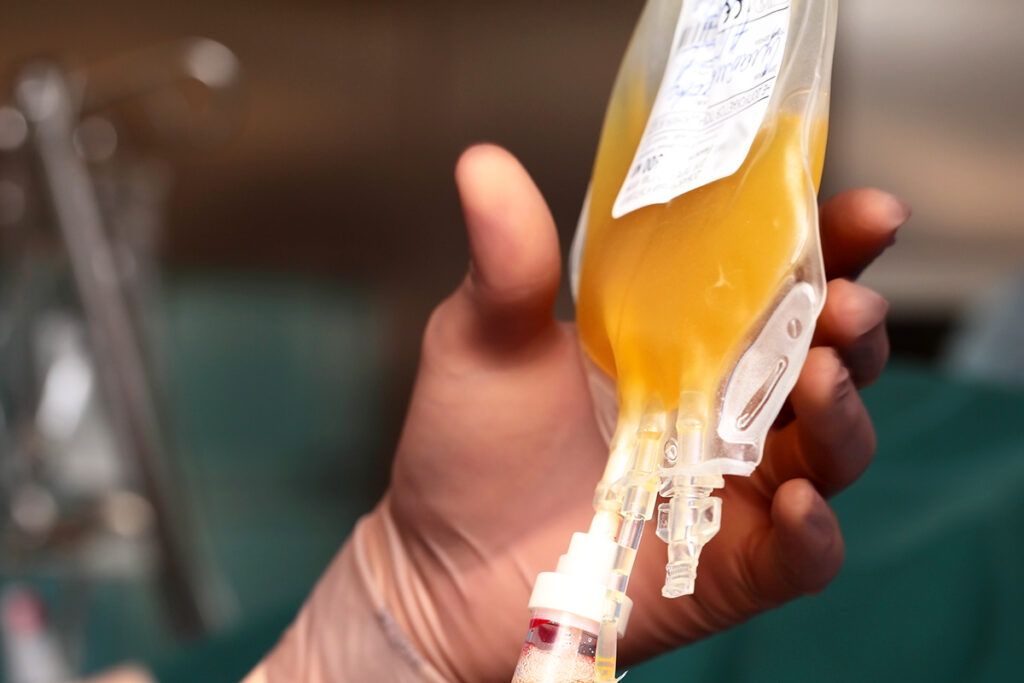
Some medications can interfere with the quality or safety of plasma donation.
Taking drugs that affect blood pressure, blood clotting, or the immune system can make the donation process uncomfortable or may cause health risks.
Some medications could cause allergic reactions, infections, or other complications for the person receiving the plasma, especially if they’re pregnant or have a weakened immune system.
Typically, a person is ineligible to donate because of certain health conditions rather than the medications they take.
A 2022 analysis found that from 2019 to 2020, 28.3% of blood donation deferrals were due to blood pressure or pulse issues, while 16% were because a person did not have enough red blood cells. Medication use only accounted for 0.6% of temporary and 0.2% of permanent plasma donation deferrals.
Most eligibility requirements and deferrals for blood donation also apply to plasma donations.
Which medications may prevent you from donating plasma?
The table below outlines some medications that might make you ineligible to donate plasma and blood while taking them. It also indicates how long you have to wait after taking the last dose before you can donate plasma.
| Medication category | Examples of generic and brand names | Deferral duration |
|---|---|---|
| blood thinners | • heparin (Heparin Sodium ADD-Vantage) • warfarin (Coumadin) • apixaban (Eliquis) • enoxaparin (Lovenox) | 2 to 7 days |
| acne medications | • isotretinoin (Accutane) | 1 month |
| anti-platelet agents | • anagrelide (Agrylin) • clopidogrel (Plavix) • vorapaxar (Zontivity) | 2 to 31 days |
| rheumatoid arthritis medications | • leflunomide (Arava) | 2 years |
| prostate medications | • finasteride (Proscar) • dutasteride (Avodart) | 1 to 6 months |
| psoriasis medications | • acitretin (Soriatane) | 3 years |
| hepatitis prevention medication | • hepatitis B immune globulin (HepaGam B) | 1 year |
| basal skin cancer medications | • vismodegib (Erivedge) • sonidegib (Odomzo) | 2 years |
| multiple myeloma medications | • thalidomide (Thalomid) • lenalidomide (Revlimid) | 1 month |
| immunosuppressant medications | • mycophenolate mofetil (CellCept) | 6 weeks |
Plasma donation centers often provide medication deferral lists. These lists can help you understand what types of medications may make you ineligible to donate plasma. You can check with your local center for the most accurate and up-to-date information for that particular location.
Free prescription coupons
Seriously … free. Explore prices that beat the competition 70% of the time.
Get free cardWhat about medications you have used in the past?
A few medications permanently exclude you from donating plasma. These may include:
- bovine-derived insulin
- growth hormone from human pituitary glands
- the psoriasis medication etretinate (Tegison)
- HIV treatments, also called antiretroviral therapy
- experimental or unlicensed vaccines or medications
It’s always a good idea to keep records of your medications and let the donation center know.
How to donate blood and plasma
If you’re eligible and willing to donate blood or plasma, here are some general steps to follow as listed by the American Red Cross. Keep in mind that the process may differ from center to center.
- Find a donation center near you: You can use this website to locate a plasma center in the United States and this website to find a local blood center.
- Prepare for your donation: Drink plenty of water, eat a nourishing meal, and avoid alcohol and caffeine before your donation.
- Arrive at the donor location: Bring your ID, medication list, and other documents the center staff requested. You can also bring a book or a charged phone to keep you entertained while you donate.
- Complete the donor questionnaire and health screening: You will be asked to fill out a form about your medical history, lifestyle, and travel history. You will also undergo some health tests, such asr blood pressure, pulse, and hemoglobin level.
- Donating: You will sit in a comfortable chair. A staff member will sterilize an area on your arm and insert a needle.
- Blood: If you’re donating whole blood, the needle will collect blood. This will generally take no more than 10 minutes.
- Plasma: If you’re donating plasma, the healthcare professional will connect you to a machine that separates your plasma from your blood and returns the red blood cells and other components to your body through the same needle. This generally takes about 45 minutes.
- Rest and recover: After your donation, a member of the clinic staff will offer you a snack and a drink. You should stay at the center for at least 15 minutes and avoid strenuous activity for the rest of the day. Drink plenty of fluids and eat well, especially iron-rich foods, to replenish your body.
—————
Download the free Optum Perks Discount Card to save up to 80% on many prescription medications. Plus, you can now get them delivered to your home in as little as 3 days. Search for your medication here.
Summary
Navigating medication-related eligibility for plasma donation can be tricky. Different centers can have different requirements for which drugs make you ineligible to donate and for how long. Some medications only exclude you for a few days, while others exclude you for life.
To find out whether you can donate, contact your local donor center for personalized guidance.