


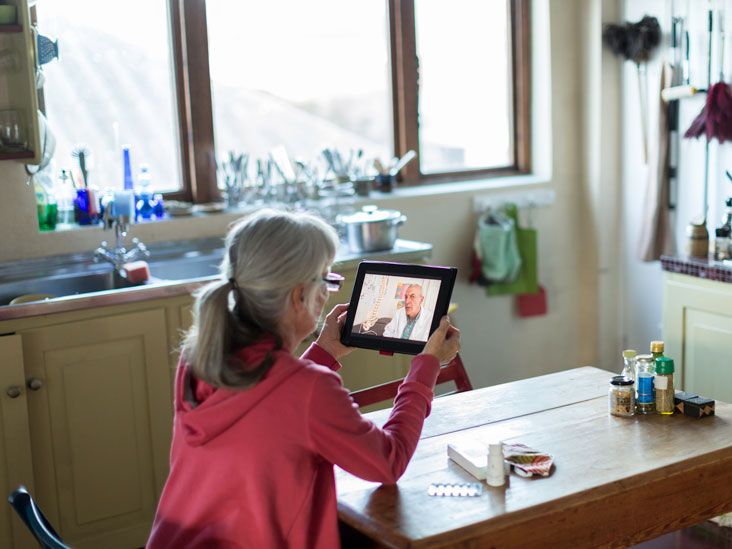
The terms “telehealth” and “virtual care” are often used interchangeably to refer to the delivery of healthcare services through technology. This can refer to online healthcare appointments, video calls, or asynchronous care.
But telehealth is actually a broader term that includes virtual care under its umbrella. Telehealth refers to all healthcare services that can be delivered using technology. Virtual care, more specifically, refers to the delivery of healthcare through virtual platforms like video calls and messaging services.
You may also hear these services referred to as online care, telemedicine, or asynchronous care. Each term may have its own nuances, but they all broadly refer to similar concepts.
—————-
Need a diagnosis or prescription quickly? Optum Perks offers personalized on-demand care in as little as 15 minutes. For $39, answer a few questions online and receive a diagnosis and treatment plan from a US-licensed healthcare professional. Get started here.

What is telehealth?
In broad terms, telehealth is the use of technology to provide or receive healthcare without an in-person appointment. This might include using smartphones or computers to carry out appointments with healthcare professionals.
It may also involve using wearable devices like sensors or smartwatches to monitor a patient. These can collect information such as your heart rate or blood pressure and send them to a healthcare professional, who can then update your medical records.
Some wearable devices are even beneficial for older adults, people with chronic conditions, or people with dementia. This allows them to remain living independently as the remote monitoring devices can quickly alert a healthcare professional if anything’s wrong.
Using telehealth services is generally very safe and effective. Each state sets its own regulations for practicing telehealth. But healthcare professionals must be accredited to practice medicine.
————-
If you need help covering the cost of medications, the free Optum Perks Discount Card could help you save up to 80% on prescription drugs. Plus, you can now get them delivered to your home in as little as 3 days. Search for your medication here.

Free prescription coupons
Seriously … free. Explore prices that beat the competition 70% of the time.
Get free cardWhat is virtual care?
Virtual care is an aspect of telehealth. It mainly revolves around online doctor visits, whether that’s through video calls, online forms and messaging, or phone calls.
According to a 2021 review, virtual care generally refers to the use of video calls to connect you with healthcare professionals regardless of your location. This is also known as synchronous care, which means it’s live.
Interestingly, the researchers looked at the possibility of using virtual reality as part of virtual care to improve the patient experience. They found that using virtual reality could have many applications in healthcare.
Many people may use the term “virtual care” to mean the same thing as “telemedicine” or “telehealth.”
Benefits and drawbacks
Telemedicine and online care have many benefits. But they may also have some drawbacks to be aware of when you’re deciding whether to try online care services.
Some benefits include:
- Convenience: You can access telemedicine at all times from anywhere, as long as you have internet access. This is often more convenient than making an in-person appointment, especially for people leading busy lifestyles or who have challenges with transportation.
- Accessibility: Telehealth may make healthcare more accessible for people with disabilities. This was especially true during the COVID-19 pandemic and lockdowns. It may make healthcare access more equitable in the future.
- Good outcomes: You may be worried that online care will provide a worse service, but according to a 2021 review, asynchronous care provides comparable outcomes to in-person appointments.
- Discreet care: Online care might be a good option if you have a condition you find embarrassing or difficult to talk about, including sexual health, birth control, and hair loss.
Some drawbacks include:
- Limited scope: Doctors can’t diagnose every condition virtually. Online care is limited to certain common conditions, such as skin conditions and sexual health. Doctors also are unlikely to be able to prescribe certain controlled substances, like ADHD medications or antibiotics.
- Privacy concerns: Telemedicine may pose a risk to your privacy as WiFi networks and online information may be intercepted by hackers or other third parties.
- Emergencies: Online care services should not be used in emergencies. If you’re experiencing an emergency, call 911 or seek medical attention immediately.
Optum Perks online care
Optum Perks offers an online care service where you can receive virtual care from a U.S.-licensed healthcare professional. For $39, you can receive a diagnosis and a prescription in as little as 15 minutes. And if you receive a prescription, you can get your medication the same day.
With this service, you fill out an online form about your symptoms and health history. Then, a certified health professional will review your answers online. You should receive your diagnosis and treatment plan shortly after. If your condition can’t be treated with online care, you won’t be charged for the service.
If you have any questions, you can message the professional online within 72 hours.
This type of care is known as asynchronous care because it happens asynchronously, which means you and the healthcare professional don’t need to be online at the same time.
Summary
Telehealth and virtual care may often be used to refer to any healthcare provided with the use of online technology. But there are some differences between them.
Telehealth is a broader umbrella term that refers to any form of remote healthcare that uses technology. Virtual care, on the other hand, generally refers to online video calls with healthcare professionals.
But many people may use the terms interchangeably to refer to asynchronous health visits, live video or phone calls, or other remote healthcare services, such as remote patient monitoring.
—————
Download the free Optum Perks Discount Card to save up to 80% on many prescription medications. Plus, you can now get them delivered to your home in as little as 3 days. Search for your medication here.