


Pelvic floor exercises target the muscles supporting your bladder, uterus, and bowels. Weak or dysfunctional pelvic floor muscles can lead to urinary urgency, frequency, and leakage, which are common symptoms of an overactive bladder (OAB).
Pelvic floor exercises involve contracting and relaxing the muscles that support the bladder, urethra, and other pelvic organs. Regular pelvic floor exercises strengthen these muscles, enhance endurance, and improve bladder control, effectively managing OAB symptoms.
Several pelvic floor exercises are commonly used to help with an overactive bladder, such as:
Squatting
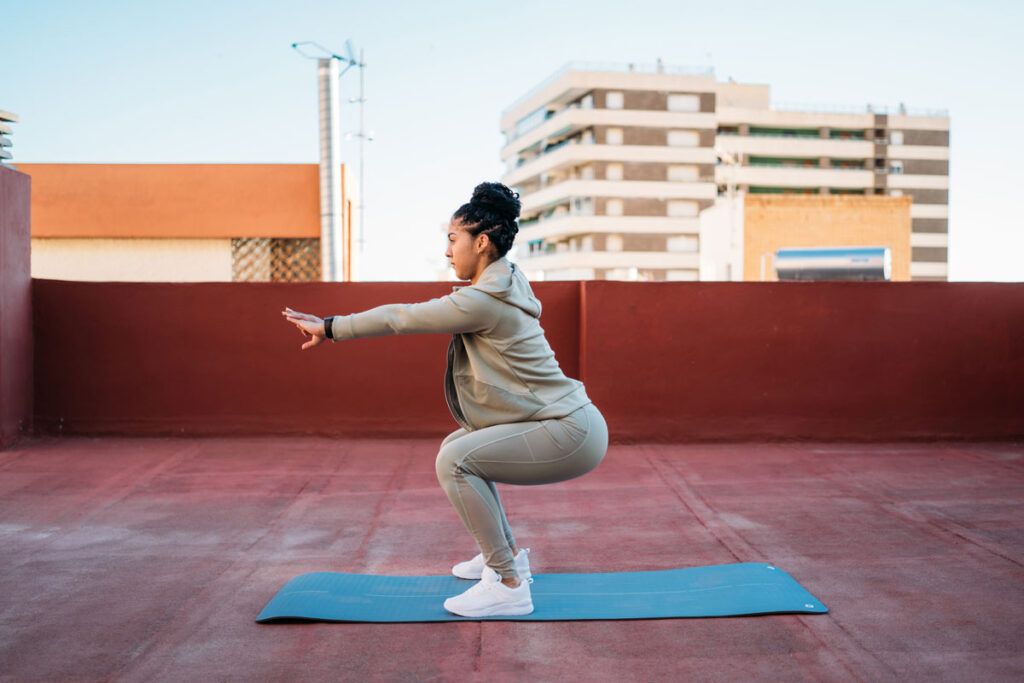
Squatting exercises engage the pelvic floor and surrounding muscles, promoting better muscle strength and coordination.
A 2020 study indicated that squatting exercises strengthen the involuntary pelvic muscles and the ligaments they contract against, which can lead to improved bladder control and reduced OAB symptoms.
You can do the exercise by following these steps:
- Stand with your feet shoulder-width apart, keeping your back straight and chest up.
- Slowly lower your body into a squatting position by bending your knees and pushing your hips backward.
- Keep your back straight and chest lifted throughout the movement.
- Hold the squat for a few seconds, then slowly rise to stand back up.
Kegels
Performing Kegel exercises can help strengthen your pelvic floor muscles, increasing their ability to support and control your bladder. This improved muscle tone can reduce urinary urgency and leakage.
Scientific evidence has shown that regular pelvic floor exercises can significantly decrease the frequency of OAB symptoms and improve overall bladder control.
You can do the exercise by following these steps:
- Begin by finding a comfortable position, such as sitting or lying down.
- Locate your pelvic floor muscles by imagining you are trying to stop the urine flow or prevent passing gas.
- Tighten these muscles and hold for a count of 3–5 seconds.
- Relax the muscles for the same amount of time.
- Repeat this cycle, aiming for 10 repetitions three times a day.

Bridge pose
The bridge pose exercise helps strengthen your glutes, core, and pelvic floor muscles, providing better support for your bladder and improved bladder control. This can reduce urinary urgency and leakage commonly associated with an OAB.
The exercise can be performed in the following steps:
- Lie on your back with your knees bent and your feet flat on the floor, hip-width apart.
- Breathe in and, as you exhale, engage your pelvic floor muscles while lifting your hips off the floor.
- Keep your shoulders and feet grounded, forming a straight line from your knees to your shoulders.
- Hold this position for a few seconds, then slowly lower your hips back to the starting position.
What exercises should be avoided?
While exercises benefit overall health, certain activities may worsen your condition or put additional stress on your pelvic floor muscles.
Consider avoiding the following exercises if you have an overactive bladder:
- High impact exercises: Activities that involve repetitive, high impact movements such as jumping, running, or vigorous dancing can strain the bladder and pelvic floor muscles, potentially triggering OAB symptoms.
- Heavy lifting: Engaging in activities that require heavy lifting, such as weightlifting or intense strength training, can increase intra-abdominal pressure, which may worsen urinary urgency, frequency, or leakage.
- Abdominal crunches: Abdominal crunches or sit-ups involve straining the abdominal muscles and can place excessive pressure on the bladder and pelvic floor muscles. These exercises may worsen OAB symptoms.
While these exercises are generally recommended to be avoided, it is important to note that every person’s experience with OAB differs. Therefore, listening to your body, monitoring your symptoms, and adapting your exercise routine is essential.
Other treatment options for an overactive bladder
There are several other treatment options available for an OAB, including:
Behavioral therapies
- Overactive bladder training: This involves scheduling urination and gradually increasing the time between bathroom visits to improve bladder control.
- Fluid management: Adjusting fluid intake, such as caffeine and alcohol, especially in the evening, can help manage OAB symptoms.
- Lifestyle changes: Weight loss, regular exercise, and working to prevent constipation can improve OAB symptoms.
Medications
- Anticholinergic medications: These medications may help treat an OAB by blocking the action of acetylcholine, a neurotransmitter that can stimulate the bladder muscles. Examples include:
- oxybutynin (Ditropan)
- tolterodine (Detrol)
- solifenacin (VESIcare)
- Beta-3 adrenergic agonists: These medications help relax the bladder muscle and increase bladder capacity. The drug mirabegron (Myrbetriq) is a commonly given example.
If you need help covering the cost of medications, the Optum Perks free Discount Card could help you save up to 80% on prescription drugs. Follow the links on drug names for savings on that medication, or search for a specific drug here.

Free prescription coupons
Seriously … free. Explore prices that beat the competition 70% of the time.
Get free cardNerve stimulation therapies
Nerve stimulation therapies, such as tibial nerve stimulation (TNS), can help by sending electrical signals to the bladder and pelvic floor muscles through the tibial nerve. This controls bladder contractions and reduces the frequency of OAB symptoms.
Botox injections
Botulinum toxin (Botox) can be injected into the bladder muscle to reduce involuntary contractions, but this is typically only considered if other treatments haven’t been effective.
Surgery
In severe cases of OAB that don’t respond to other treatments, a doctor may recommend surgical options like bladder augmentation or urinary diversion.
Consider talking with a healthcare professional to determine the most appropriate treatment for your specific OAB symptoms. The choice of treatment often depends on the severity of your condition and individual factors.
Summary
Incorporating pelvic floor exercises into your routine can help manage an overactive bladder. By strengthening these muscles, you can improve bladder control and reduce symptoms of urgency and leakage.
Examples of exercises for an OAB include:
- Kegels
- squatting
- bridge pose
If you experience an OAB regularly, consider speaking with a healthcare professional about your symptoms. They can put together a treatment plan based on your individual needs.
Download the free Optum Perks Discount Card to save up to 80% on some prescription medications.