


Early diagnosis, accurate staging, and timely intervention may increase the chance of recovery from lung cancer. But every person responds differently to lung cancer treatment. Plus, other factors, like social support, may also influence outlook.
Lung cancer is broadly categorized into two groups, based on similarities in treatments and outlooks. These groups are:
- small cell lung cancer (SCLC), also known as oat cell cancer
- non-small cell lung cancer (NSCLC), which includes:
- adenocarcinoma
- squamous cell carcinoma
- large cell carcinoma
Generally, 10%–15% of all lung cancers are SCLC, while about 80%–85% are NSCLC.
This article will discuss the different treatment modalities of lung cancer depending on the disease stage and type.
Treatment modalities for lung cancer
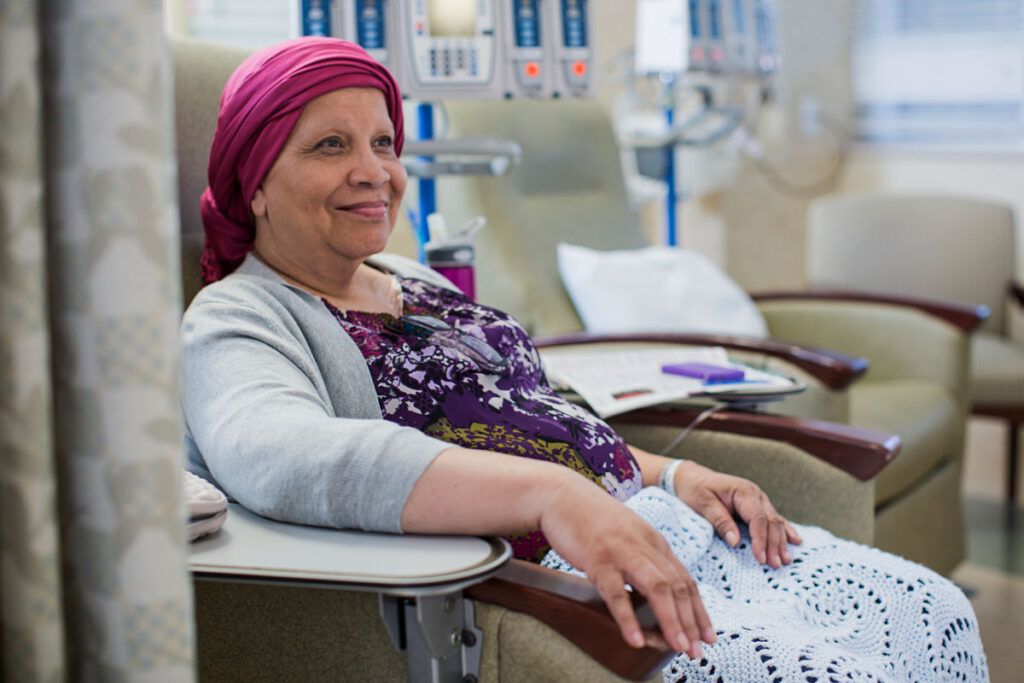
Cancer treatment may be planned around your specific case, medical history, and overall health.
In general, lung cancer treatment options may include:
- Surgery: During earlier stages, your oncologist may recommend the surgical removal of lung tissue affected by cancer cells. This is done to help prevent cancer cells from spreading to other areas of your body.
- Radiotherapy: Your health team may opt to use beams of intense energy, or radiation, aimed at areas where cancer cells are present. This ionizing radiation aims to neutralize the DNA of lung cancer cells, which will stop their growth. Radiotherapy may be used on its own or combined with surgery and chemotherapy.
- Chemotherapy: In general, chemotherapy is the use of chemicals (drugs) to destroy cancer cells. It may involve injections, intravenous (IV) therapy, or pills.
- Immunotherapy: There are different types of immunotherapy used to treat lung cancer. Immunotherapy may involve removing immune cells from cancerous tissues in the lung, then modifying them in a laboratory before reintroducing them into your body. It may also involve using drugs and immune system proteins that boost your immune system.
- Targeted therapy: Doctors use drugs or lab-made proteins that attach to cancer cells, making them more visible or vulnerable to the immune system efforts. Some types of targeted therapy inhibit cancer cell growth and spread, or they directly kill cancer cells.
Healthcare professionals may assess your case and decide to use two or more cancer treatment modalities. For example, an oncologist may recommend radiotherapy to shrink a large lung tumor and surgery to completely remove the tumor cells.

Treatment for small cell lung cancer
Treatment for SCLC may depend on the stage of the disease:
- Limited stage: Cancer cells are found in only one side of the chest and possibly local lymph nodes.
- Extensive stage: Cancer cells have spread to other parts of the lungs and, sometimes, to distant organs.
Once your health team establishes the stage of lung cancer, they may recommend one or more treatment options.
Limited stage
You may undergo any of these treatment plans:
- chemotherapy and radiation therapy
- combination chemotherapy (two or more chemotherapy drugs)
- surgery to remove tumors, followed by chemotherapy or chemoradiation therapy
Extensive stage
Your health team may use a combination of the following cancer treatments:
- immunotherapy and combination chemotherapy
- combination chemotherapy
- radiation therapy
Chemotherapy drugs for small cell lung cancer may include gemcitabine and cisplatin.
Treatment for non-small cell lung cancer
Treatment for NSCLC may vary according to the clinical stage of the disease.
These are the stages:
- Stage 0: The cancer cells are within the lining of the airways and have not spread to the lung tissue or other areas.
- Stage 1: The tumor is growing but still at an early stage. It may be spreading into deeper lung tissues.
- Stage 2: Cancerous growths enlarge, gradually spreading to other parts of the lungs and the lymph nodes within the lungs.
- Stage 3A: Cancer covers a larger portion of the lung tissue and has spread to involve multiple lymph nodes and other parts of the lungs.
- Stage 3B: Cancer growth is significant, and it involves multiple lymph nodes in the lungs and nearby structures.
- Stage 4: Cancer cells have spread to more than one area in the other lung, the fluid surrounding the lung, the heart, or distant parts of the body. NSCLC is more likely to spread to the brain, bones, liver, and adrenal glands.
- Stage 4A: Cancer has spread within the chest or to an area outside of the chest.
- Stage 4B: Cancer has spread outside of the chest to more than one area within an organ or to more than one organ.
Once your health team identifies the stage of the lung cancer, they may explore specific treatment options for that phase.
NSCLC treatment according to the stage may involve these options:
- Stage 0: surgical removal of the cancerous growth
- Stage 1: surgery of the cancerous growth and, in some cases, chemotherapy to target deeper tissue
- Stage 2: surgery with either chemotherapy or radiotherapy
- Stage 3A: a combination of radiation therapy and chemotherapy, as well as surgery
- Stage 3B: a combination of chemotherapy and radiotherapy; sometimes, chemotherapy with more than one drug
- Stages 4A and 4B: targeted therapy or immunotherapy, in combination with chemotherapy or radiotherapy
Chemotherapy drugs for NSCLC may include doxorubicin and etoposide.
————-
If you need help covering the cost of medications, the free Optum Perks Discount Card could help you save up to 80% on prescription drugs. Plus, you can now get them delivered to your home in as little as 3 days. Search for your medication here.

Free prescription coupons
Seriously … free. Explore prices that beat the competition 70% of the time.
Get free cardComplementary or alternative lung cancer treatment options
Complementary and alternative therapies are nonconventional and natural therapies that may complement medical treatment for lung cancer.
The National Cancer Institute lists the following as complementary and alternative therapies for cancer:
- Mind-body therapies: These may involve strategies like deep breathing, mental focus, and body movements to relax the body and mind. Examples are meditation, yoga, and tai chi.
- Biological supplements: These are vitamins, minerals, herbs, and other plant products that may help boost the immune system.
- Manipulative and body-based practices: Practices like massage and chiropractic therapy may be recommended in some cases. However, massage may not be recommended in certain cases or stages. That’s why it’s important to discuss these modalities with your oncology team before trying any of them.
- Energy healing therapies: These are based on the idea that balancing the energy flow in the body will help boost its healing abilities. Although there is no scientific evidence that backs this concept, these therapies may help with relaxation efforts in general. Examples are reiki and therapeutic touch modalities.
- Whole medicine systems: These include acupuncture and ayurvedic medicine.
It may be a good idea to discuss these options with your health team to determine how or if they may interact with your medical treatment.
Lung cancer survival rates
Your response to lung cancer treatment depends on many factors beyond the modality your health team prescribes.
Experts usually estimate survival rates within a 5-year period, based on how many other people with the same type of cancer and stage lived for that period of time. These numbers are not definite and depend on many factors, including new treatments or your individual response to treatment.
For SCLC, these are the estimated survival rates for the latest available data between 2012 and 2018, according to the American Cancer Society (ASC):
| Stage | 5-year survival rate |
| Localized: Cancer has not spread outside the lungs | 30% |
| Regional: Cancer has spread to immediate nearby regions or lymph nodes | 18% |
| Distant: Cancer has spread to distant organs like the brain or liver | 3% |
| All stages combined | 7% |
For NSCLC, these are the estimated survival rates for the latest available data between 2012 and 2018, per the ASC:
| Stage | 5-year survival rate |
| Localized: Cancer has not spread outside the lungs | 65% |
| Regional: Cancer has spread to immediate nearby regions or lymph nodes | 37% |
| Distant: Cancer has spread to distant organs like the brain or liver | 9% |
| All stages combined | 28% |
Summary
Lung cancer treatment varies depending on the type and stage of the disease. It usually includes one or a combination of these modalities: surgery, chemotherapy, immunotherapy, and targeted therapy.
Early diagnosis of lung cancer and prompt intervention can influence the outlook. How you respond to treatment depends on many factors, including social support and new medications. Estimated survival rates do not determine the success of your treatment. They only serve as general guidance.
—————
Download the free Optum Perks Discount Card to save up to 80% on many prescription medications. Plus, you can now get them delivered to your home in as little as 3 days. Search for your medication here.