


People can bite their lips for many different reasons, and sometimes it can become a habit.
If you keep biting your lips and it causes discomfort, it may mean there is an underlying cause that could benefit from treatment.
Why might someone bite their lip?
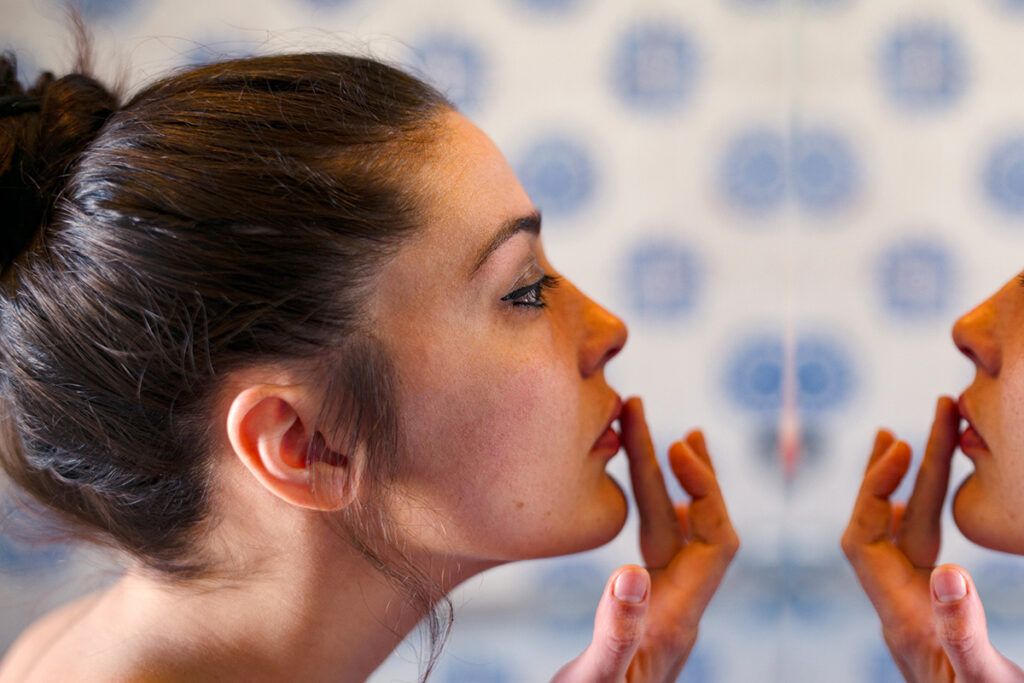
In many instances, people may not even be aware that they are biting their lips, which can become an automatic, subconscious symptom.
If you find yourself often biting your lip, it might be for one of these common reasons:
- Nervous habit: Biting lips can become a habit, especially during periods of boredom or when you’re in deep thought.
- Concentration: You may bite your lip when you are intensely focused on a task or trying to solve a problem.
- Chapped lips: Dry and chapped lips can lead to biting in an attempt to remove dead skin or relieve discomfort.
- Oral sensory stimulation: Some people may enjoy the sensation of biting their lips, which can become a pleasurable habit.
Physical or psychological
Frequently biting your lip can be a sign or symptom of an underlying physical or mental condition.
Physical reasons
If you keep biting your lip accidentally when speaking or eating, you may consider getting this checked by a dentist. They will be able to advise if you have the following conditions:
- Malocclusion: This is where your teeth do not line up correctly.
- Temporomandibular joint disorder: This condition affects your jaw joint and the muscles that control how your jaw moves.
Psychological reasons
Frequently biting your lips can make them very sore. If you find yourself having difficulty stopping, even though it is causing pain, it might be due to:
- Stress and anxiety: Stressful or anxious situations can trigger lip biting to distract yourself from difficult emotions or feelings of nervousness.
- Medical conditions: Certain medical conditions like bruxism (teeth grinding) can cause you to keep biting your lips, cheeks, and tongue.
- Persistent tic disorder: In some cases, lip biting may associate with tic disorders, which are repetitive and involuntary movements.
Is lip biting a body-focused repetitive behavior?
The Diagnostic and Statistical Manual of Mental Disorders, 5th edition, text revision (DSM-5-TR). is a book that helps doctors diagnose mental health conditions. It categorizes lip biting as a body-focused repetitive behavior (BFRB).
BFRB describes any form of repetitive behavior involving different functions, like nail, lip, or cheek biting, hair pulling, or skin picking and scratching.
If you’ve tried many times to stop biting your lips, but nothing has helped yet, and it causes you significant distress or difficulties in your daily life, then a doctor might diagnose it as a BFRB.
Before you receive the diagnosis, your doctor may explore other associated actions, like hair-pulling disorder (trichotillomania), skin-picking disorder (excoriation), stereotypic movement disorder, or nonsuicidal self-injury.

Treating the underlying causes
If attempts to stop lip biting have been unsuccessful, help is available.
Nonmedical treatment
The favored treatment for BFRB is cognitive behavioral therapy (CBT). Studies show that CBT works better than medication alone.
Some CBT types that prove themselves useful in treating lip biting are:
- Habit reversal training
- Decoupling
- Decoupling in sensu
The TLC Foundation for BFRBs provides helpful videos demonstrating each of these techniques.
Other types of therapy that may be able to help include:
- Comprehensive behavioral training
- Acceptance and commitment therapy
- Dialectical behavior therapy
Medication options
Although BFRBs like lip biting are quite common, no Food and Drug Administration (FDA)-approved medications are available to treat them.
However, for some people, medication might be needed first or alongside CBT to help them with their condition.
Some medications that have shown limited potential for helping to treat BFRBs include:
- Selective serotonin reuptake inhibitors (SSRIs): fluoxetine (Prozac), fluvoxamine (Luvox), sertraline (Zoloft), citalopram (Celexa)
- Opiate antagonists: naltrexone (Revia)
- Neuroleptics: olanzapine (Zyprexa)
- Mood stabilizers: lithium (Lithobid)
Another promising option is a supplement called N-acetylcysteine. This amino acid has successfully reduced compulsive behaviors in BFRB disorders for some people, with little to no side effects.
The choice between medication, CBT, or a mix of both depends on what suits your situation.
If you need help covering the cost of medications, Optum Perks free Discount Card could help you save up to 80% off prescription drugs. Follow the links on drug names for savings on that medication, or search for a specific drug here.

Free prescription coupons
Seriously … free. Explore prices that beat the competition 70% of the time.
Get free cardGetting help for lip biting
Finding a primary care physician or qualified therapist with experience in supporting people to stop compulsive behaviors will give you the best chance of success.
The TLC Foundation for BFRB provides a useful online referral directory of trained and experienced medical and therapeutic healthcare professionals.
They also provide a list of support groups that may help with feelings of social anxiety and loneliness that you may experience alongside lip biting.
Summary
If you bite your lips frequently, it can make them sore or be embarrassing in social situations.
You might do it accidentally, in which case you may consider speaking with a dentist.
If it has become a habit that you find difficult to stop, CBT is usually the first-line treatment a doctor will recommend, and it’s often more effective than medication alone.
Although there are only a few medication options that may help, there is ongoing research to help find more treatment options.
If you have been biting your lip, whether voluntarily or involuntarily, for a long time, support is available.
Download the free Optum Perks Discount Card to save up to 80% on some prescription medications.