


Sinus pressure can build up due to inflammation in your sinus cavities, which are the hollow spaces in your head connected to your nasal passages. This inflammation can result from conditions like sinusitis, colds or the flu, or even allergies.
This pressure buildup can be painful, and it might feel like an ache in parts of your face. You’re most likely to feel this pressure buildup around your nose, eyes, or cheekbones. But it can radiate to your teeth and jaw, or it might appear as a headache.
There are techniques you can try at home to relieve sinus pressure, including massaging the parts of your face where the pressure builds up. Alongside these, you can take over-the-counter (OTC) or prescription medications to soothe your symptoms.
—————-
Need a diagnosis or prescription quickly? Optum Perks offers personalized on-demand care in as little as 15 minutes. For $39, answer a few questions online and receive a diagnosis and treatment plan from a US-licensed healthcare professional. Get started here.

Home remedies to relieve sinus pressure
Often, sinus pressure is a symptom of a viral infection like the common cold. In these cases, there’s very little that doctors can do to treat your condition. Instead, home remedies might be the best way to relieve sinus pressure and soothe any pain.
Facial massage
One way you may be able to relieve some pressure is by massaging the area in your face where you feel the buildup. Humans have four pairs of sinuses, three of which are in the face. You can identify which part of your face is affected and use that as a guide.
For example, if the pressure is in the frontal sinuses, you’ll feel the pressure in your forehead. If it’s in the maxillary sinuses, you’ll likely feel it in your cheeks around your nose.
The points to focus on for sinus massage are the following:
- Maxillary sinuses: Massage on either side of your nose, below your cheeks and above your teeth.
- Frontal sinuses: Massage above the eyes, on your forehead.
- Sphenoid and ethmoid sinuses: Massage the area between the bridge of your nose.
To massage your sinuses, simply place your index and middle fingers on the affected area and gently apply pressure while massaging slowly in a circular motion. You might find that this relieves the pressure for a time, but you may need to repeat the process throughout the day as the pressure builds back up.
Nasal irrigation
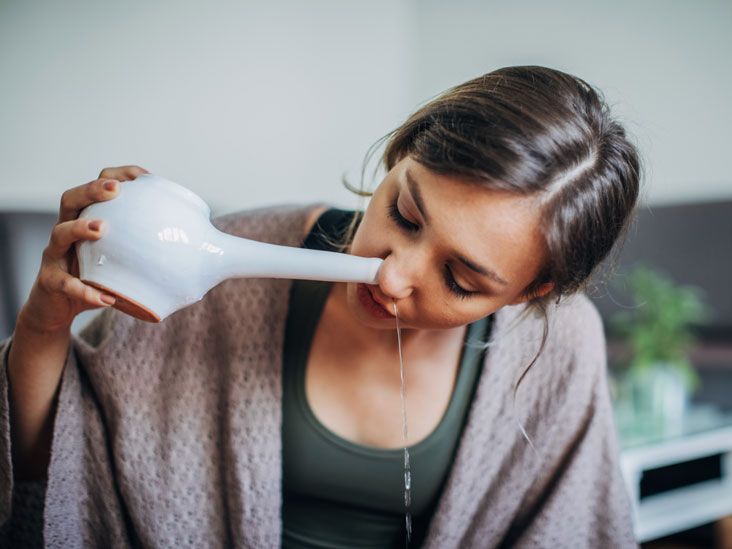
Nasal irrigation, or sinus rinsing, can be an effective way to loosen built-up mucus in your sinuses to relieve pressure. It can also remove allergens like pollen or pet dander if that’s what causes your inflammation. It involves using lukewarm, sterile saltwater to flush out your sinuses.
You can do this with nasal irrigation devices such as:
- neti pots (little teapots with long spouts)
- bulb syringes
- squeeze bottles
According to the Food and Drug Administration (FDA), these are safe and effective when you use them correctly and clean them every time.
Steam inhalation
Breathing in steam is a common home remedy for colds and sinus infections, and it’s recommended by the Centers for Disease Control and Prevention (CDC) for sinus infections.
It can loosen the mucus in your nasal passages and open up your airways, relieving inflammation and ultimately lowering pressure.
OTC medications to relieve sinus pressure
Several OTC medications can help soothe your symptoms, although some might not directly remove sinus pressure.
- Decongestants: These can help unblock your airways and thin mucus, reducing pressure in your sinuses. You can take them by mouth, but some come in nasal spray form. Examples include pseudoephedrine (Sudafed) and oxymetazoline (Afrin).
- Nonsteroidal anti-inflammatory drugs (NSAIDs): NSAIDs can reduce inflammation, which may help with sinus pressure. They can help reduce the pain associated with sinusitis, including headaches. Examples include ibuprofen (Advil) and naproxen (Aleve).
- Antihistamines: If your sinus pressure is caused by allergies, antihistamines can help. They can help reduce allergy symptoms, easing the inflammation and pressure in your sinuses. Examples include cetirizine (Zyrtec) and diphenhydramine (Benadryl).
Please also note that it is not recommended to use nasal decongestants for more than 3 days at a time. This is due to a risk of dependence and the congestion getting worse again when you stop using them.
————-
If you need help covering the cost of medications, the free Optum Perks Discount Card could help you save up to 80% on prescription drugs. Plus, you can now get them delivered to your home in as little as 3 days. Search for your medication here.

Free prescription coupons
Seriously … free. Explore prices that beat the competition 70% of the time.
Get free cardPrescription treatments for sinus pressure
If your sinus infection is caused by a virus, like the cold or flu viruses, doctors are unlikely to prescribe medications to manage it. But if it’s caused by a bacterial infection, doctors will prescribe antibiotics. In the United States, sinusitis is one of the top reasons doctors prescribe antibiotics.
Antibiotics that doctors may prescribe include:
- amoxicillin
- amoxicillin/clavulanate (Augmentin)
- trimethoprim/sulfamethoxazole (Bactrim)
- clindamycin (Cleocin)
Summary
Sinus pressure can result from infections in your nasal passages, often caused by viruses, allergies, or bacteria. The pressure is usually due to inflammation and a buildup of mucus.
Home remedies like massaging your pressure points can help relieve the pressure while you recover. Nasal irrigation can also help with this. However, these home remedies may not treat the cause of the pressure.
OTC medications like decongestants and antihistamines may also help reduce pressure. But if your sinus infection is caused by bacteria, doctors will prescribe antibiotics.
—————
Download the free Optum Perks Discount Card to save up to 80% on many prescription medications. Plus, you can now get them delivered to your home in as little as 3 days. Search for your medication here.