


Key takeaways
- Psoriasis is an autoimmune condition that causes skin cells to multiply too quickly, creating thick, scaly plaques. Eczema (atopic dermatitis) is a chronic skin condition that causes dry, itchy patches, and its exact cause isn’t fully understood.
- Psoriasis often appears on the elbows, knees, and scalp, while eczema typically shows up inside the elbows and behind the knees. Both conditions can cause itching and discoloration, and they may look different depending on your skin tone.
- Treatment options overlap for both conditions, including topical corticosteroids and biologic medications. However, psoriasis may also be treated with retinoids, coal tar, and phototherapy, while eczema may respond to antihistamines and JAK inhibitors.
Overview
Psoriasis and eczema are two common skin conditions. They have many similarities, both affecting your skin and causing itching and discoloration. But these conditions are very different, with different causes, treatments, and presentations.
It’s important to know which condition you have in order to seek the most effective treatment. This Psoriasis Action Month, learning more about your condition is a great way to become more empowered in your skin.
—————-
Need a diagnosis or prescription quickly? Optum Perks offers personalized on-demand care in as little as 15 minutes. For $39, answer a few questions online and receive a diagnosis and treatment plan from a US-licensed healthcare professional. Get started here.

What is psoriasis?
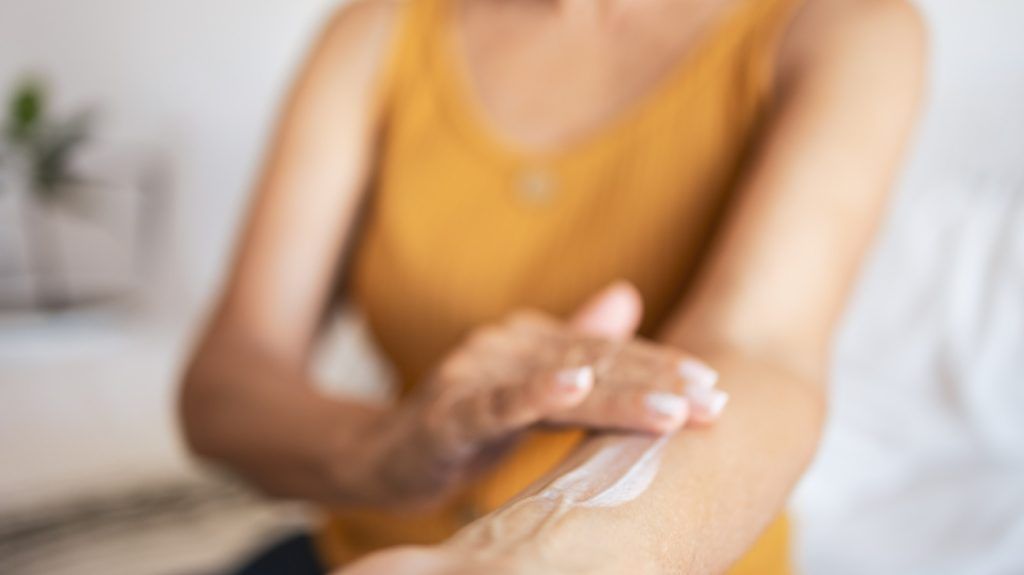
There are several different types of psoriasis, but plaque psoriasis is the most common type, causing 80% to 90% of psoriasis cases.
Psoriasis is an autoimmune condition, which means it’s caused by an overactive immune system response. This causes your skin cells to multiply too quickly, which leads to patches of skin becoming scaly and inflamed. These patches are known as plaques.
Plaque psoriasis causes areas of thick, raised skin, most often on the scalp, elbows, or knees. It is important to note that psoriasis can look different depending on the color of your skin. It may look:
- red
- white
- gray
- purple
- ashen
Experts aren’t sure exactly why some people develop psoriasis, but they believe it could be due to genetic and environmental factors. It may also appear in cycles known as flare-ups, caused by certain triggers, such as:
- infections
- dry, cold weather
- sunburn and hot weather
- excess alcohol consumption
- smoking
- stress
- certain medications
How is psoriasis treated?
There are several different medications available to treat psoriasis, including:
- Topical corticosteroids: Topical steroids can help reduce inflammation and ease symptoms. Lower-dose steroid treatments are available over the counter (OTC), while higher doses may require a prescription. Examples include triamcinolone (Kenalog) and betamethasone (Sernivo)
- Topical retinoids: Retinoids are synthetic forms of vitamin A. These may help normalize the growth of your skin cells and reduce inflammation. Tazarotene is a common example.
- Vitamin D3 analogs: These are synthetic forms of vitamin D that help slow skin cell growth, reduce inflammation, and remove scales. Examples include calcipotriene (Dovonex) or calcitriol (Rocaltrol).
- Salicylic acid: This topical treatment promotes the removal of built-up skin cells.
- Coal tar: Coal tar products like creams and ointments help reduce scaling, itching, and inflammation.
- Biologic medications: These are oral medications that can help reduce your body’s immune system response. They’re typically prescribed if other treatments don’t work. Examples include adalimumab (Humira) and etanercept (Enbrel).
Another option for psoriasis is phototherapy, or light therapy. Different types of phototherapy include ultraviolet B (UVB) therapy, ultraviolet A (UVA) combined with psoralens therapy, and excimer lasers (which emit UVB).
What is Psoriasis Action Month?
Psoriasis Action Month happens every August, and it aims to raise awareness, support those affected by psoriasis, and promote research for better treatments and a potential cure.
Many people with psoriasis report feeling stigmatized. Psoriasis Action Month aims to reduce this stigma and empower people to live well with psoriasis.
Learn more about Psoriasis Action Month here.
————-
If you need help covering the cost of medications, the free Optum Perks Discount Card could help you save up to 80% on prescription drugs. Plus, you can now get them delivered to your home in as little as 3 days. Search for your medication here.

Free prescription coupons
Seriously … free. Explore prices that beat the competition 70% of the time.
Get free cardWhat is eczema?
Eczema is an umbrella term for a group of skin conditions that cause symptoms like patches of discoloration, dryness, and itching. It may also be known as atopic dermatitis. It’s a chronic condition, meaning it affects you long term, and there’s currently no permanent cure.
Experts don’t currently know the exact cause of eczema, but it likely has an underlying genetic link.
Like psoriasis, eczema symptoms happen in flare-ups caused by triggers. Below are some examples of triggers that can cause eczema to worsen:
- hormonal changes
- cold, dry weather
- pollen
- pet fur
- dust mites
- harsh or highly fragranced soap, detergent, or shampoo
Eczema treatment
There are several topical and systemic medications that can help manage eczema symptoms:
- Antihistamines: If your eczema is related to allergies, antihistamines may help ease your symptoms.
- Topical steroids: Like psoriasis, eczema is commonly treated with topical steroids like triamcinolone (Kenalog) and betamethasone (Sernivo). These reduce inflammation and can help reduce the immune response behind flare-ups.
- Calcineurin inhibitors: These may be topical or oral. Examples include tacrolimus (Nujo) and pimecrolimus (Elidel).
- Janus kinase (JAK) inhibitors: These may be topical or oral. One example is ruxolitinib (Opzelura).
- PDE4 inhibitors: These may be topical or oral. A common option is crisaborole ointment (Eucrisa).
- Biologics: Two biologic drugs may help with eczema. These are dupilumab (Dupixent) and tralokinumab-ldrm (Adbry).
Psoriasis vs. eczema at a glance
This table shows some of the key differences between psoriasis and eczema at a glance:
| Psoriasis | Eczema | Both | |
|---|---|---|---|
| Symptoms | Scaly plaques on skin | Dry skin and rashes | Itching and discoloration, rash-like appearance |
| Causes | Autoimmune condition | Unknown, possible genetic link | Triggered by environmental factors |
| Treatments | Topical retinoids, coal tar, salicylic acid | Antihistamines, JAK inhibitors | Corticosteroids, biologics |
| Locations | Elbows and knees | Typically inside the elbows and behind the knees |
Did you know? Although rare, it is possible to have both psoriasis and eczema at the same time.
Online care for psoriasis and eczema
Whether you have psoriasis or eczema, it’s important to get an accurate diagnosis to start a treatment regimen that’s right for you. Your doctor may be able to diagnose these conditions just by looking at your skin.
Online care services, including Optum Perks Online Care, may make getting treatment easier. With these services, you can submit an online form answering a few questions about your symptoms, and a US-licensed healthcare professional will respond soon after to prescribe a treatment plan.
Next steps
If you have a rash on your skin, you may wonder if it’s psoriasis or eczema. Here are some things to think about to decide which may be affecting you:
- Where does the rash appear?
- What exactly does the rash look like?
- Does it go away?
- Is it triggered by anything in particular?
- Does anyone in my family have eczema or psoriasis?
—————
Download the free Optum Perks Discount Card to save up to 80% on many prescription medications. Plus, you can now get them delivered to your home in as little as 3 days. Search for your medication here.