


————–
Need a prescription or refill? You can get discreet and expert on-demand care in as little as 15 minutes. For $39, answer a few questions online and get a treatment plan from a US-licensed healthcare professional. Get started here.

Overview
Several factors can affect the cost of contraception, such as the birth control patch. Usually, private health insurance covers the cost of the patch. But if you are uninsured, you might have to pay out of pocket.
Depending on your income status, you may be able to access free or low cost birth control at a family planning clinic or community health center. The birth control options available to you might include the patch or other methods like oral contraceptives or condoms.
Everyone, regardless of status, can use programs like prescription discount cards, which might reduce the retail cost of birth control.
What is the typical cost of birth control patches without insurance coverage?
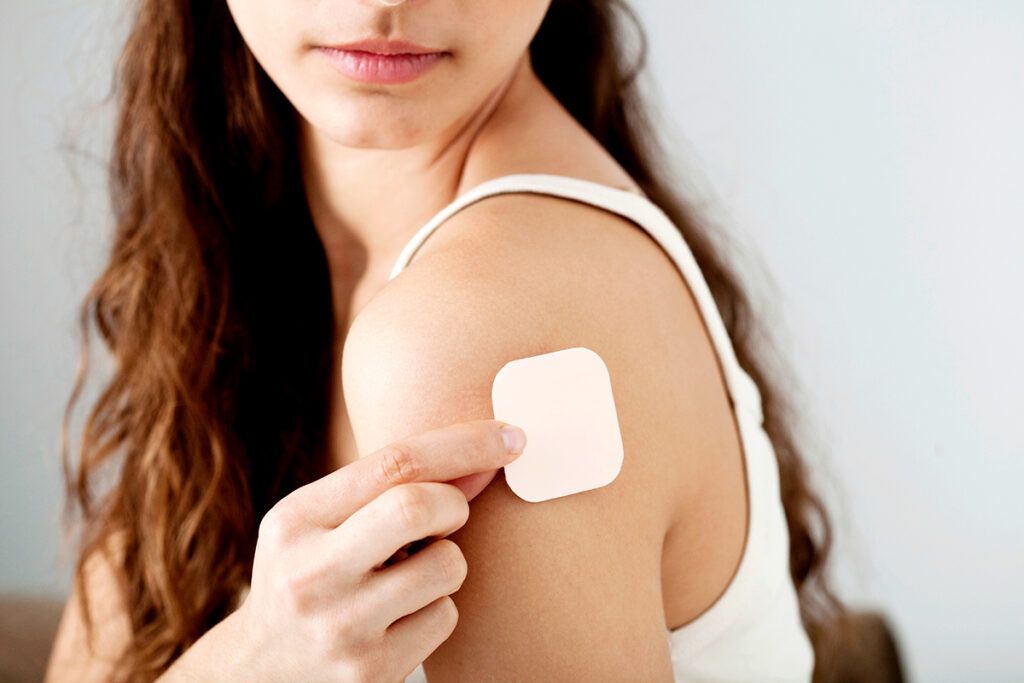
The birth control patch releases hormones (progestin and estrogen) into your bloodstream. These hormones work to prevent pregnancy by stopping ovulation and thickening the mucus in your cervix.
Birth control patches are available under two brand names: Xulane and Twirla. Both patches require a prescription. The patch should be placed on an area of skin and replaced every 7 days for 3 weeks.
The cost of the patch itself without insurance can vary, but it typically can cost around $150 for a three-patch supply, according to Planned Parenthood. One patch lasts for 1 week, so a three-patch supply will last a month if you do not wear a patch when you get your period.
Since the birth control patch requires a prescription, you will usually have to pay for a visit with a healthcare professional who can write the prescription. Without insurance, this can range from $35–$250, as reported by Planned Parenthood. But you may qualify to visit a free or low cost healthcare clinic.
The birth control patch is 93% effective at preventing pregnancy with typical use. That said, it does not provide protection from sexually transmitted infections (STIs).
If you use condoms to protect against STIs while you are on the patch, you can expect to pay about $1–$2 each for condoms. Many community health centers and family planning clinics also provide condoms for free.
————-
If you need help covering the cost of medications, the free Optum Perks Discount Card could help you save up to 80% on prescription drugs. Plus, you can now get them delivered to your home in as little as 3 days. Search for your medication here.

Free prescription coupons
Seriously … free. Explore prices that beat the competition 70% of the time.
Get free cardWhat factors influence the cost of birth control?
Under the Affordable Care Act, most insurance plans must cover birth control and family planning counseling at no out-of-pocket cost. This coverage includes hormonal birth control methods such as birth control pills, vaginal rings, and the birth control patch.
If you do not have insurance and do not qualify for financial assistance programs, you might have to pay the full cost of the medication.
Prescription drugs may have a high cost for several reasons. According to the American Medical Association, pricing might be influenced by pharmaceutical companies, pharmacy benefit managers, and health insurance companies.
Xulane and Twirla are both branded products. Other birth control options might have generic, or nonbranded, versions available. Typically generics are cheaper than branded drugs. Generic oral contraceptive pills, for example, are typically available at a lower cost.
What financial assistance programs are available?
Several options can help reduce the cost of the birth control patch and other contraceptive methods. These can help fill the affordability gap if you do not have private health insurance.
Examples of financial assistance programs include:
Medicaid
Medicaid offers health coverage for low-income adults. Coverage under Medicaid includes visits to a healthcare professional as well as the cost of birth control prescriptions. You can apply for Medicaid through the appropriate agency in your state.
Community health centers
Community health centers and family planning clinics provide free or low cost birth control to people who do not have insurance. They can also provide other medical services, such as education and counseling. Some centers might provide free or low cost access to the birth control patch if you do not have insurance.
You can locate a community health center using the find a health center tool and a family planning clinic using the find a family planning clinic tool. Both tools are operated by the U.S. Department of Health and Human Services.
Manufacturer coupons
People with private insurance can get more savings directly from the companies that make the birth control patch, Xulane and Twirla. You can access these via the company’s website.
These coupons do not apply to people who don’t have insurance or who have insurance funded by a state or the federal government. Manufacturer coupons might have other restrictions and might run out after a period.
How can Optum Perks help?
Prescription discount cards allow you to save on prescription medications, but they cannot be used alongside health insurance.
Optum Perks offers a free Discount Card that can help you save up to 80% on thousands of FDA-approved medications, like birth control patches. You can search for a specific drug here to see how much you could save on your medication.
————–
Need to refill a birth control medication? You can get discreet and expert on-demand care in as little as 15 minutes through Optum Perks. For $39, answer a few questions online and get a treatment plan from a US-licensed healthcare professional. Get started here.
Summary
The birth control patch can cost around $150 for a three-patch supply if you do not have insurance. Three patches will usually last for a month if you skip a week during your period. The birth control patch is free under most private insurance plans and Medicaid.
If you are uninsured, a community health center or family planning clinic might be an option for free or low cost birth control and family planning counseling.
Prescription discount cards can also provide a way to reduce the cost of contraception. Anyone can use discount cards, regardless of income status.